

The Challenge
MedStar Montgomery's domestic hot water heat exchangers had been a recurring problem for the facilities team. The units demanded constant attention just to stay online:
- Frequent fouling that required monthly cleaning and adjustments to hold setpoint
- Difficult access that added to the maintenance burden
- Constant tinkering by staff and vendors to keep units running
- A failure that flooded the mechanical room and dropped system pressure
When one unit failed and poured water into the mechanical room — causing a loss of system pressure — and the second could no longer maintain temperature, the hospital faced both an immediate crisis and the need for a long-term solution that would also advance its sustainability goals.
The Solution
With hot water service down and costly boiler rentals stacking up, the Crothall facilities team at MedStar Montgomery acted quickly. They needed a long-term solution that could be installed under emergency conditions while meeting the hospital's energy and maintenance goals.
Several options were considered, then ruled out:
| Option Considered | Why It Was Ruled Out |
|---|---|
| Natural Gas Boilers | Negative impact on county environmental performance KPIs |
| Plate-and-Frame | Efficient, but leak-prone gaskets and more frequent maintenance |
| U-Tube Exchangers | Prone to fouling, with heavy historical maintenance demands |
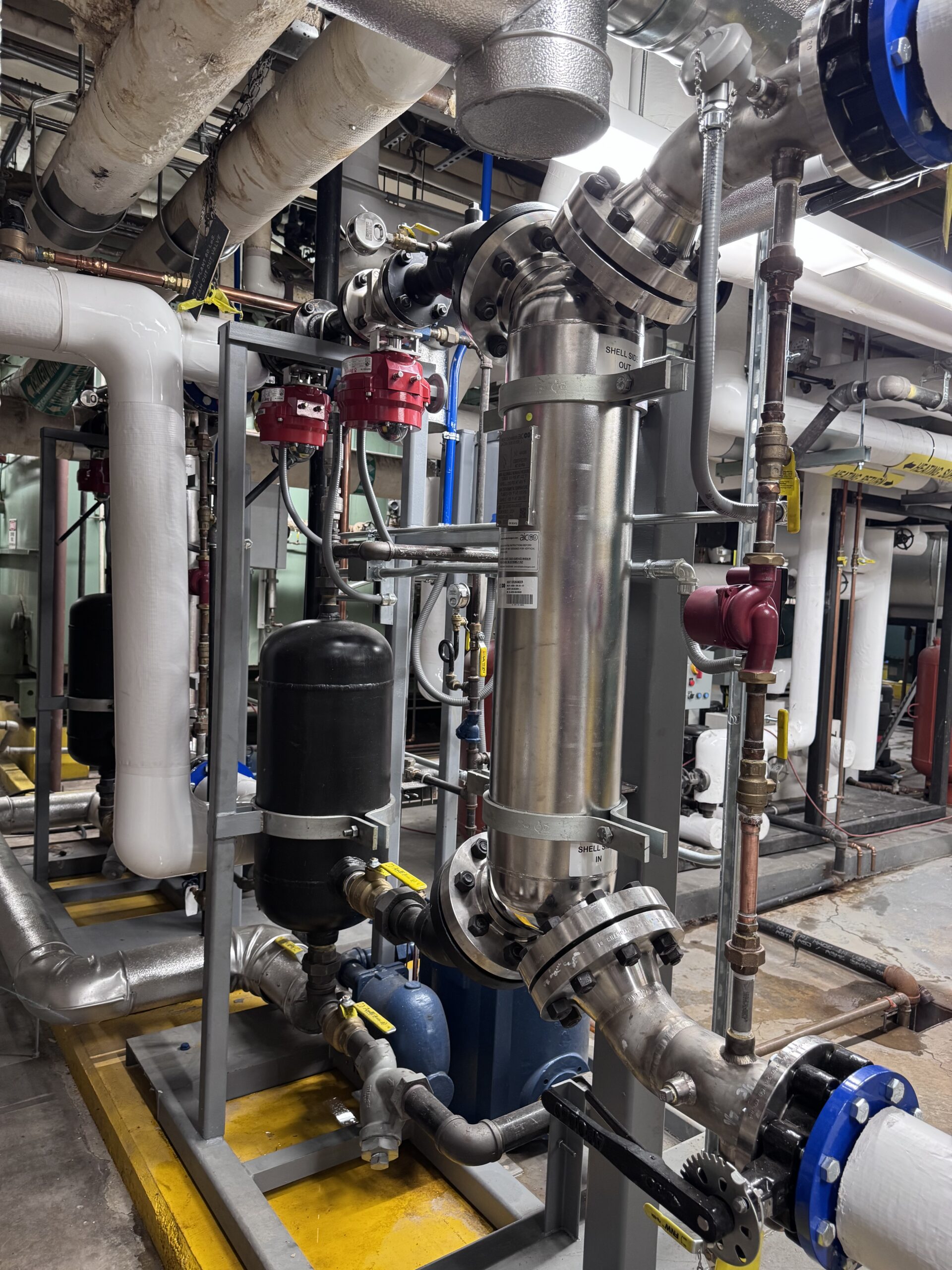
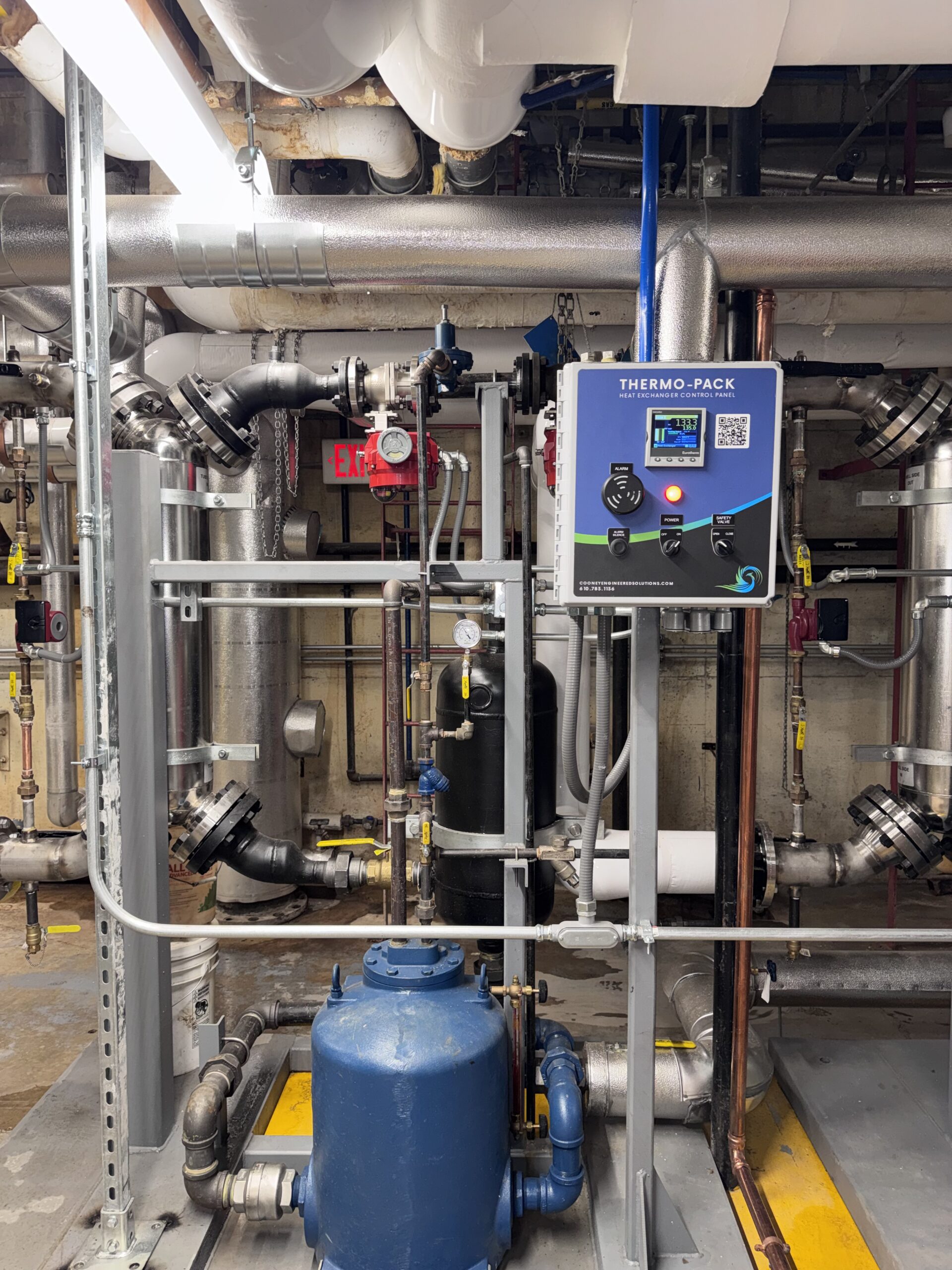
The shell & coil Thermo-Pack™ emerged as the clear fit — reliable and aligned with long-term sustainability goals. A cost savings analysis projected a 16% improvement in energy recovery efficiency over traditional shell & tube exchangers, translating into substantial long-term operating savings.
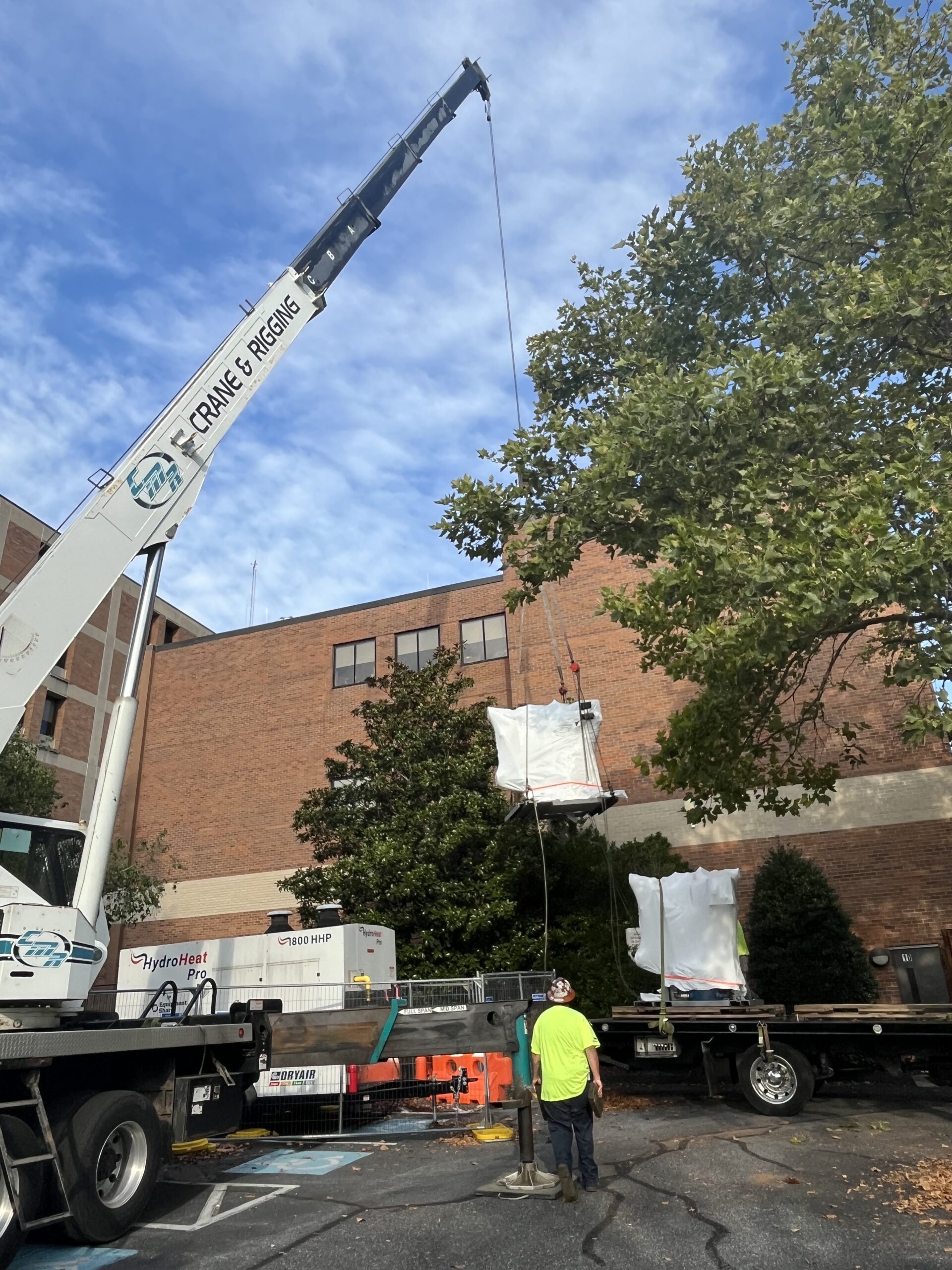
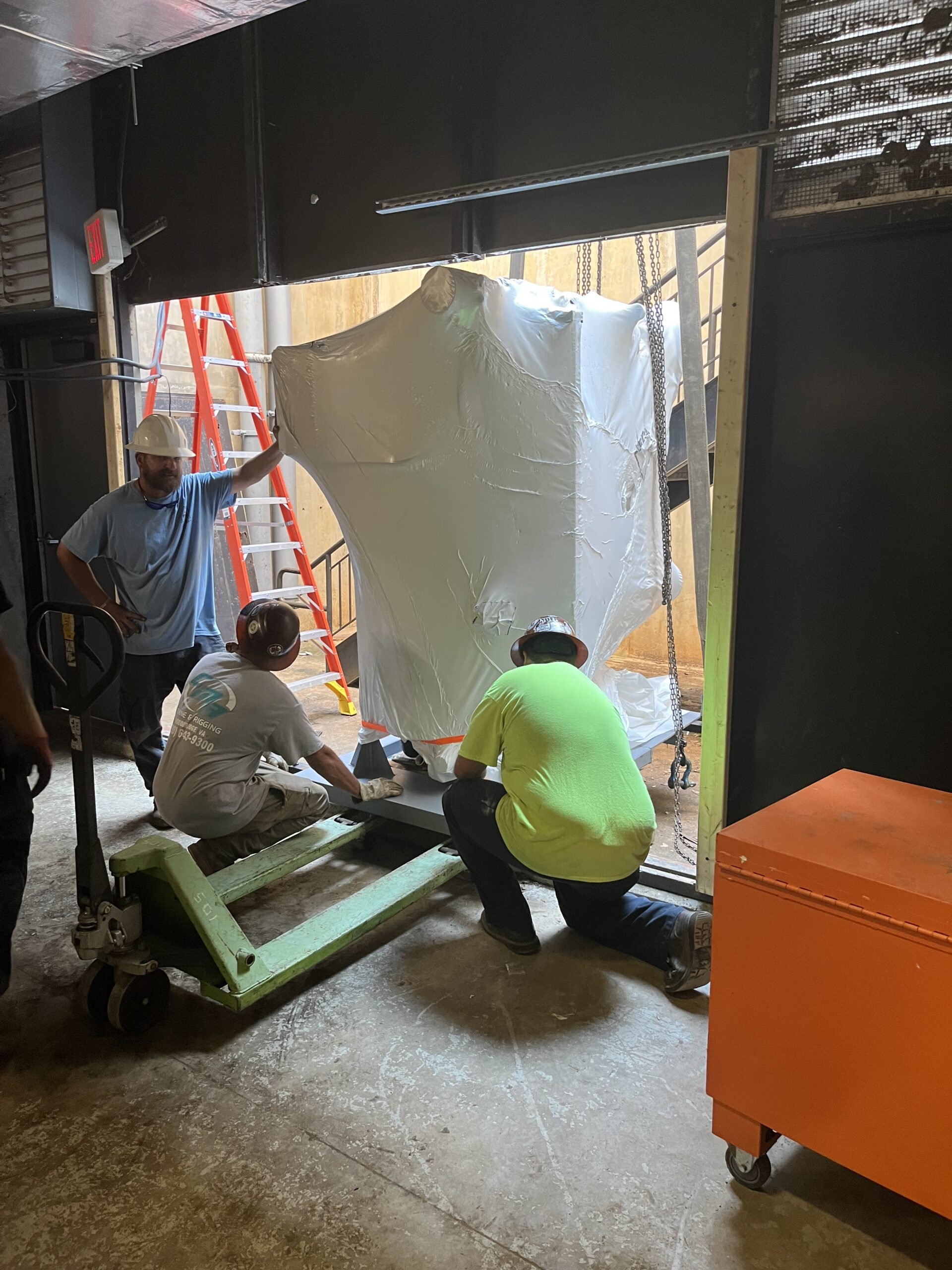
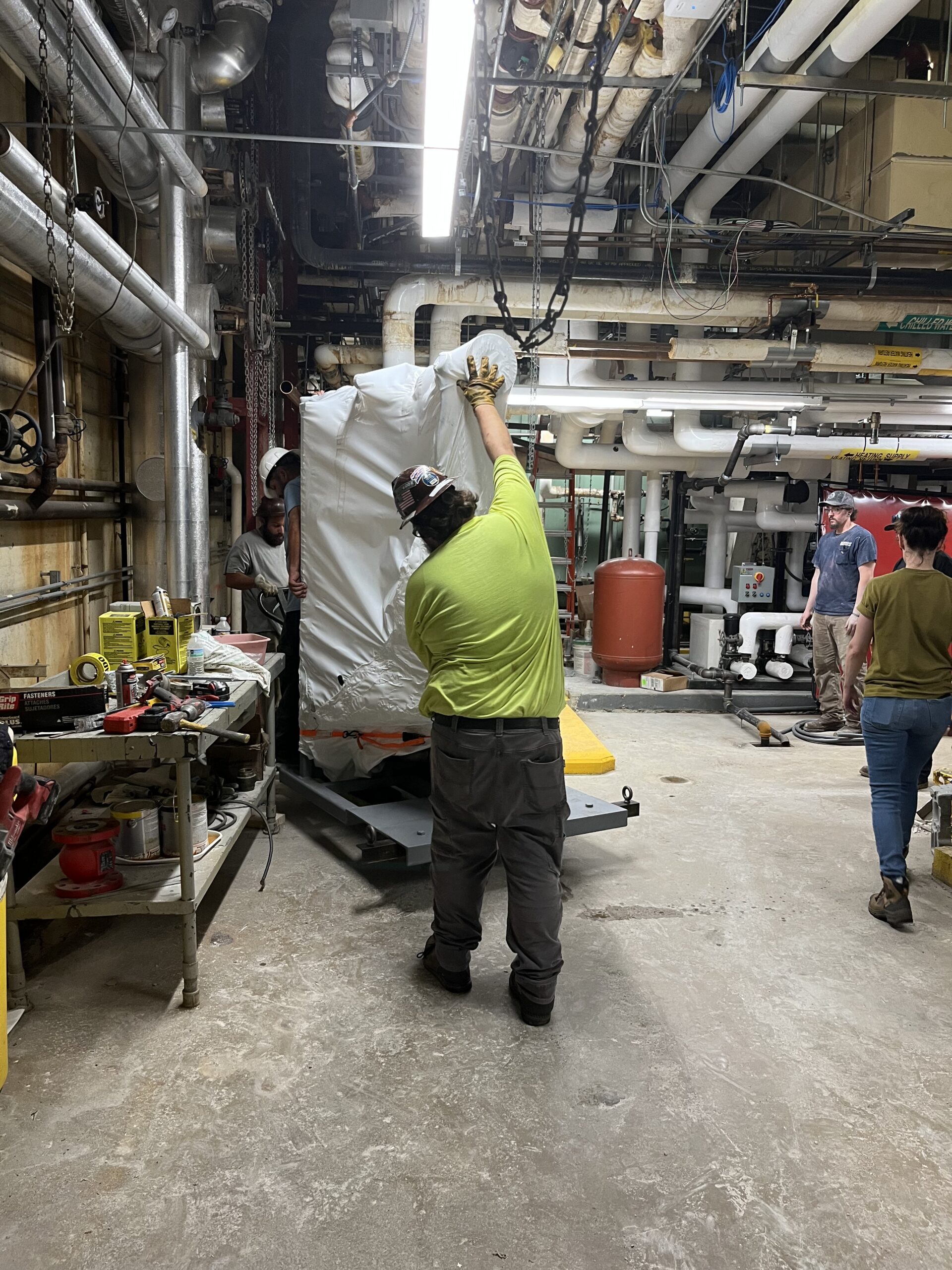
Ketchum & Walton worked closely with Cooney Technologies to engineer a Thermo-Pack skid tailored to the site, while Limbach prepared for installation in a constrained, fast-moving environment. Cooney's engineering team customized the design for the mechanical room's low headroom and reconfigured components for easier access and future maintenance.
Key Features of the Thermo-Pack at MedStar Montgomery
- Fully welded 316L stainless steel, cross-counterflow design resists fouling and thermal shock
- Condensate sub-cooling recovers energy, prevents waste, and supports MedStar's sustainability goals
- Compact, vertical skid design fit the low headroom and relocated equipment to an accessible location
- Threaded ports allow simple, quick cleaning of the coil shell, reducing future maintenance
- Plug-and-play installation enabled fast delivery and startup under an accelerated timeline
The Results
Since startup, MedStar Montgomery has seen immediate improvements: stable water temperatures, minimal maintenance demands, and 100% condensate recovery. While it's still early to fully quantify real-world ROI, the project has already avoided $50,000 per month in rental boiler costs and reduced operating risk.
To understand long-term value, Cooney ran a cost savings analysis comparing the Thermo-Pack to a traditional shell & tube heat exchanger. The Thermo-Pack recovers an additional 785,000 BTU/hour of energy — a 16% increase in energy recovery efficiency and projected savings of over $16 per hour of operation. Field observations suggest actual conditions could push savings closer to 20%, making the engineering analysis a conservative estimate.
Highlights
- Stable operation: Hot water temperatures have held steady since startup
- Condensate recovery: Eliminated all condensate dumping
- Maintenance: Staff report simple operation with minimal adjustments
- Cost avoidance: Avoided a $50,000/month rental boiler
- Steam energy savings: 16% higher efficiency vs. traditional designs — ~$140,685/year in steam savings
"The absolute biggest value is the heat recovery from condensate, followed closely by the low-maintenance design."
— Joey Mollica, Manager, Building Automation & Retro Commissioning, MedStar CCO (Crothall Healthcare)As MedStar reflects on the project, the long-term value of the new system is clear. The hospital is now considering making shell & coil heat exchangers the standard across its facilities.