

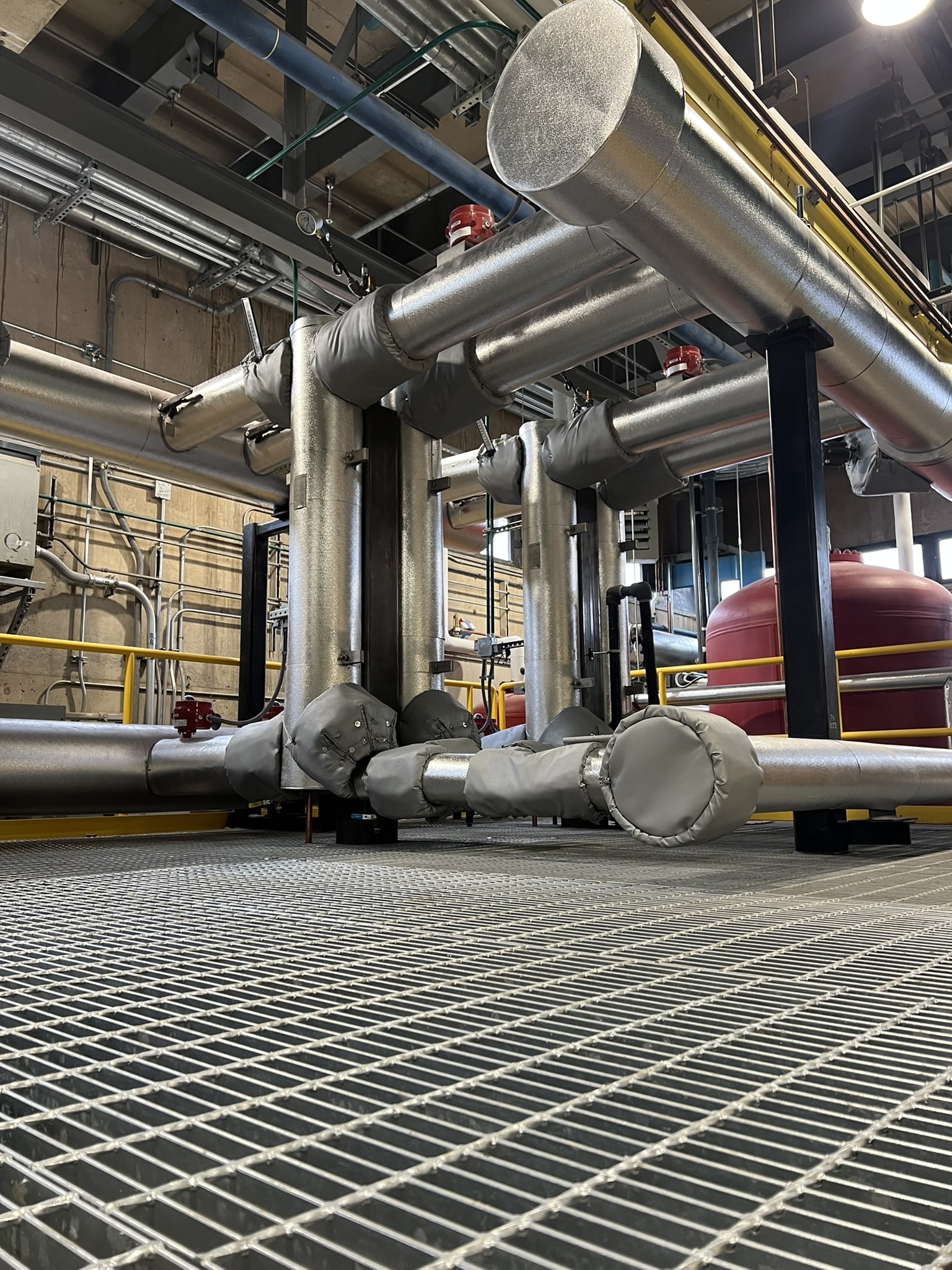
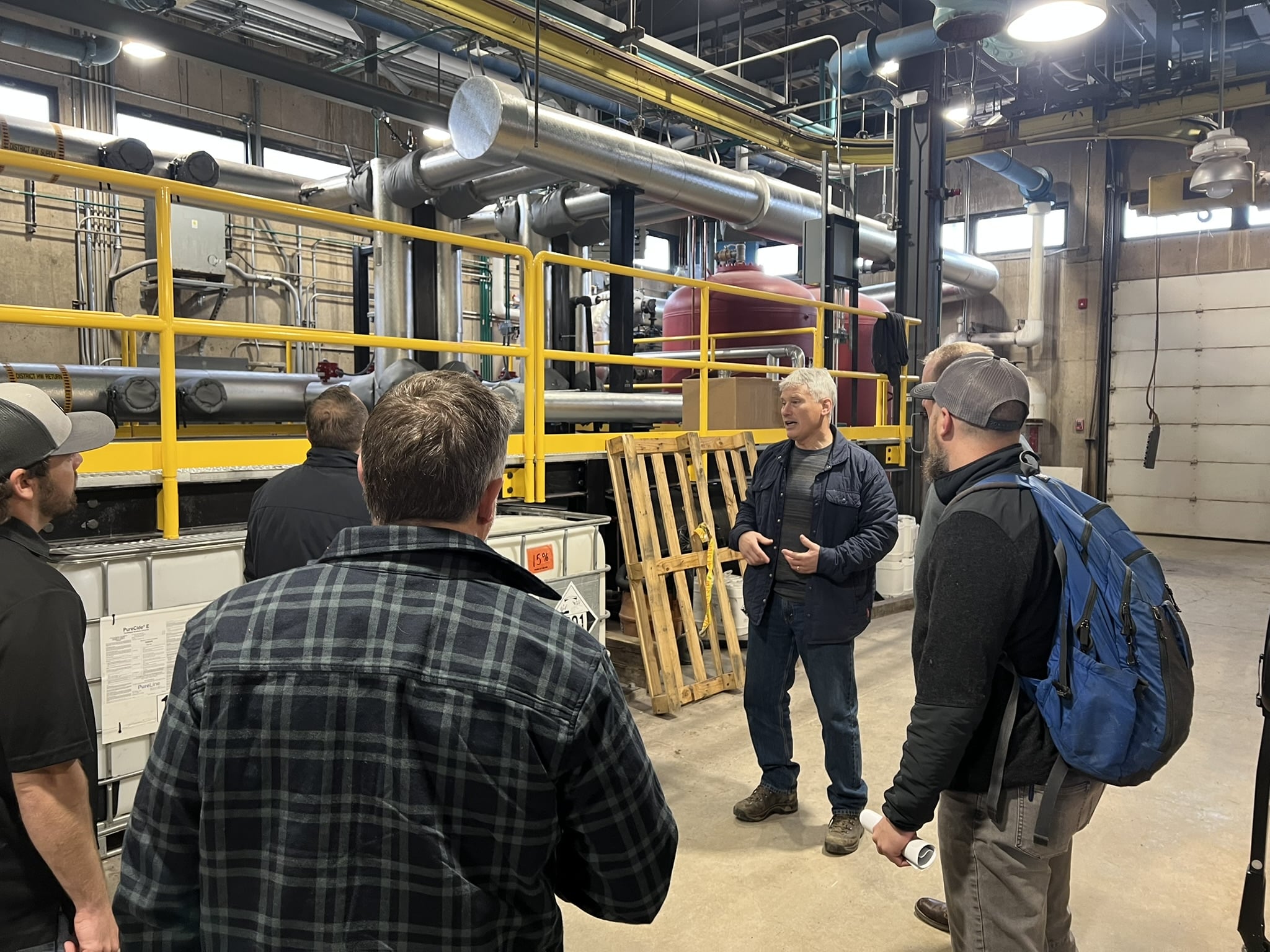

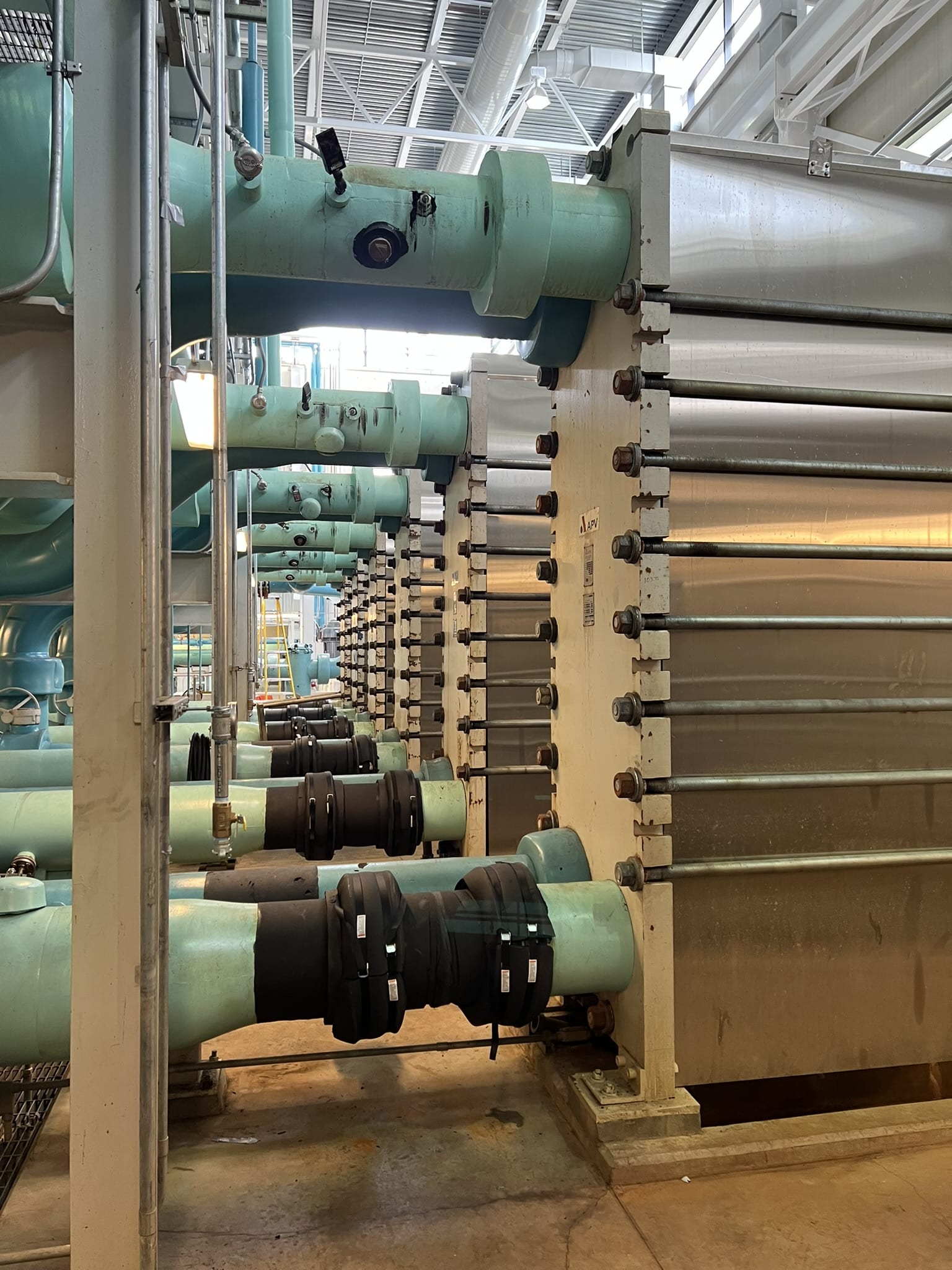
Cornell University has undertaken a steam-to-hot-water conversion to modernize its century-old district energy system, reduce carbon emissions, and improve energy efficiency across campus. Cooney Thermo-Pack heat exchangers play a critical role in this transformation, delivering reliable and efficient steam-to-hot-water conversion at key campus heating stations.
Challenge
Cornell’s original campus heating system, dating back to 1888, relied on steam for building heat distribution. While effective in its era, the aging steam infrastructure posed significant challenges:
- Energy inefficiency compared to modern hot water systems
- High maintenance and repair costs
- Increased greenhouse gas emissions that conflicted with the university’s carbon neutrality goals
Cornell needed a durable, compact, and high-performance solution to replace bulky shell-and-tube heat exchangers and enable the transition to low-temperature hot water.
Solution
Cornell selected Thermo-Pack heat exchangers for several steam-to-hot-water conversion stations across campus. Compared to traditional horizontal shell-and-tube heat exchangers, Thermo-Pack units offer:
- A significantly smaller footprint, ideal for tight mechanical rooms
- Greater efficiency, with an average of 10–12% energy savings thanks to advanced sub-cooling design that eliminates flash steam
- Precise steam control, utilizing 300:1 turndown control valves for exceptional regulation of steam
- Corrosion resistance with 316L stainless steel construction for durability
- Skid-mounted design, simplifying installation and future maintenance
Results
- Enhanced energy efficiency: Thermo-Pack’s advanced sub-cooling design and precision control valves reduce steam consumption, saving more energy than traditional systems when producing heating hot water.
- Sustainability progress: The project contributes to Cornell’s goal of achieving carbon neutrality by 2035.
- Long-term reliability: Durable construction and smart design ensure minimal maintenance and operational disruptions.
The project demonstrates how modern heat transfer technology can help institutions meet ambitious environmental goals while upgrading critical infrastructure.
Learn more about Cornell’s steam-to-hot-water conversion project in the Cornell Chronicle