
Free Engineering White Paper
Why HVAC Coils Freeze & How to Prevent Failure.
Water can freeze and rupture a coil in minutes — often faster than a freeze stat can respond. Well-designed systems freeze anyway. This white paper covers why, and what to do about it.
White Paper
Why HVAC Coils Freeze.
Failure modes, protection methods, and Freeze Block® field data.
Get the white paper
Tell us where to send it.
The Problem
A properly designed system should never freeze. Except they do.
There will always be variables outside the control of even the best design — controls, dampers, power, steam pressure, human hands on a setpoint. Any one of them can freeze a coil in a system designed perfectly for normal operation. And when it happens, the coil is the cheap part. The damage below it is what shows up on the claim.
The white paper breaks down exactly how — and how fast — it happens.
“Water can freeze and rupture a coil in minutes, often faster than you can respond to a freeze stat alarm. The Cooney Coil helps eliminate this issue, as well as potential flooding and the associated damage.”
What You'll Learn
What's include in the White Paper
Failure-mode analysis and field data you can cite — the technical language to defend the spec.
How Coils Freeze
The physics of freeze-induced rupture — and why damage happens in minutes.
Why Coils Freeze
The real-world failure modes that beat well-designed systems.
Traditional Protection Methods
Freeze stats, pumps, glycol, dampers, draining — and where each falls short.
Freeze Block® Technology
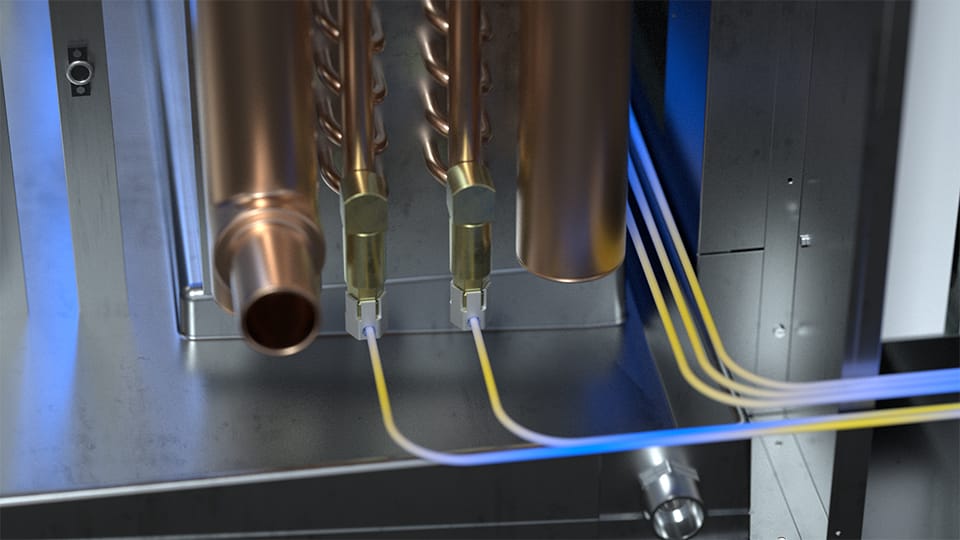
How a dual-sensing relief valve prevents rupture without controls, pumps, power, or human response.
Track Record
Proven Where Failure Isn't an Option.
“We were very happy that when our system failed, our coils did not rupture. Instead, the relief valves had discharged and when we thawed the coils they went back into operation with no leaks. This event made believers out of us.”