
Glycol Energy Analysis
What would your hydronic system look like without glycol?
Run the numbers on your design. The Glycol Energy Analysis calculator shows the operating cost and energy impact of glycol in your system, and what the design looks like with water protected by Freeze Block® coils instead.
-
Built by a third-party engineering firm using ASHRAE reference tables.
-
Enter your design parameters, get a cost and energy comparison for your system.
-
The output is yours. Use it in design review.
Get Instant Access to the Glycol Calculator
Enter your details below to get instant access to the free energy analysis.
Behind the Numbers
Built on ASHRAE Data by a Third-Party Engineering Firm
Our glycol calculator was developed by a third-party engineering firm using ASHRAE reference tables. You're not getting a sales tool dressed up as a calculator. You're getting a working analysis you can take into a design review.
Why this Tool Exists
Glycol is the default. It shouldn't be automatic.
Glycol protects hydronic systems from freeze damage, but it carries a cost most specs don't account for. Higher viscosity, lower heat transfer, pump energy penalties, and a maintenance cycle that doesn't show up until year three.
For some designs, the tradeoff is worth it. For others, it's not, and you'd never know without running the math.
- 01 Operating cost delta between water and a glycol mix at your concentration
- 02 Energy penalty across pump load, heat transfer efficiency, and system life
- 03 System redesign view if glycol is reduced or removed from the protection strategy
- 04 Freeze Block® fit: where coil-level protection changes the calculation
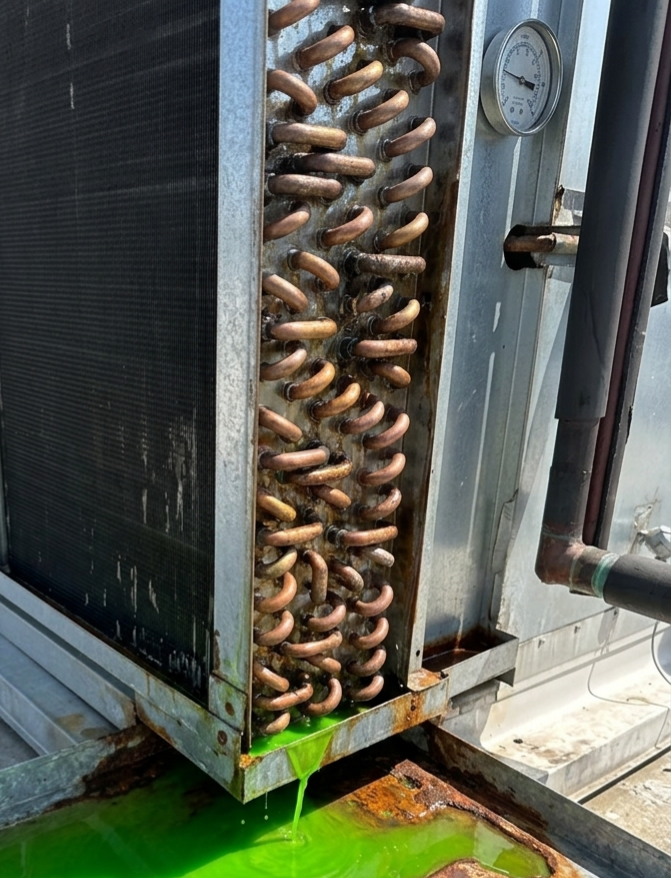
considerations for using glycol
The full cost of glycol isn't just the fluid.
A glycol decision touches operating cost, maintenance, environmental risk, and design margin. The calculator pulls these together so you see the whole picture, not just the line item on a quote.
-
01
Heat Transfer Efficiency
Glycol's lower thermal conductivity means more pump work and larger equipment to hit the same design load.
-
02
Viscosity & Pump Energy
Higher viscosity drives up pressure drop, which drives up annual pump kWh. The calculator quantifies it for your flow conditions.
-
03
Concentration & Replacement
Glycol degrades. Periodic testing, top-off, and full replacement add lifecycle cost most pro formas miss.
-
04
Spill & Disposal Exposure
Glycol is regulated waste. Mechanical room incidents and disposal costs are real line items, not edge cases.
Want to go deeper? Earn 1 PDH while you're at it.
We run a one-hour lunch & learn for engineering teams, Energy Savings Alternative to Glycol. It earns 1 PDH and covers what the calculator hints at in more depth, with case histories, wind tunnel testing data, and the physics behind temperature-sensing valves.
Delivered onsite or virtual. Time built in for your team's questions.
- 10 min Current industry dilemma: freeze damage case histories including GlaxoSmithKline, plus the physics of freezing water and temperature-sensing valves
- 20 min Development of freeze protection technology: from glycol and coil draining to wind tunnel testing results with Dr. Jian of Super Radiator, BAS integration, and design specs
- 15 min Glycol deep dive: thermal conductivity, viscosity, lifecycle cost, and when reducing dependency makes engineering sense
- 15 min Questions & answers with your team