A frozen coil doesn't just fail quietly. It ruptures, floods the mechanical room, shuts down the space it serves, and turns into a repair bill and an insurance conversation you didn't budget for.
The good news: freeze damage is preventable. There are several proven ways to protect fluid and steam coils through winter, and each one comes with its own trade-offs. This guide walks through why coils freeze, the protection options available, and how to pick the right approach for your facility.
What a Frozen Coil Actually Costs You
Fluid and steam coils are what keep a building comfortable. When they're exposed to freezing temperatures, they can rupture, and the damage rarely stops at the coil.
When a ruptured coil thaws and the system tries to return to pressure, water goes where it shouldn't. That can mean flooded equipment, mold and mildew remediation, and days of downtime while the space sits offline. Downtime costs revenue and productivity, and it puts you on the wrong end of every occupant complaint in the building. File an insurance claim and your premiums may climb from there.
One frozen coil can set off all of it. That's why freeze protection is worth getting right before the first hard freeze.
Reasons Why Coils Freeze
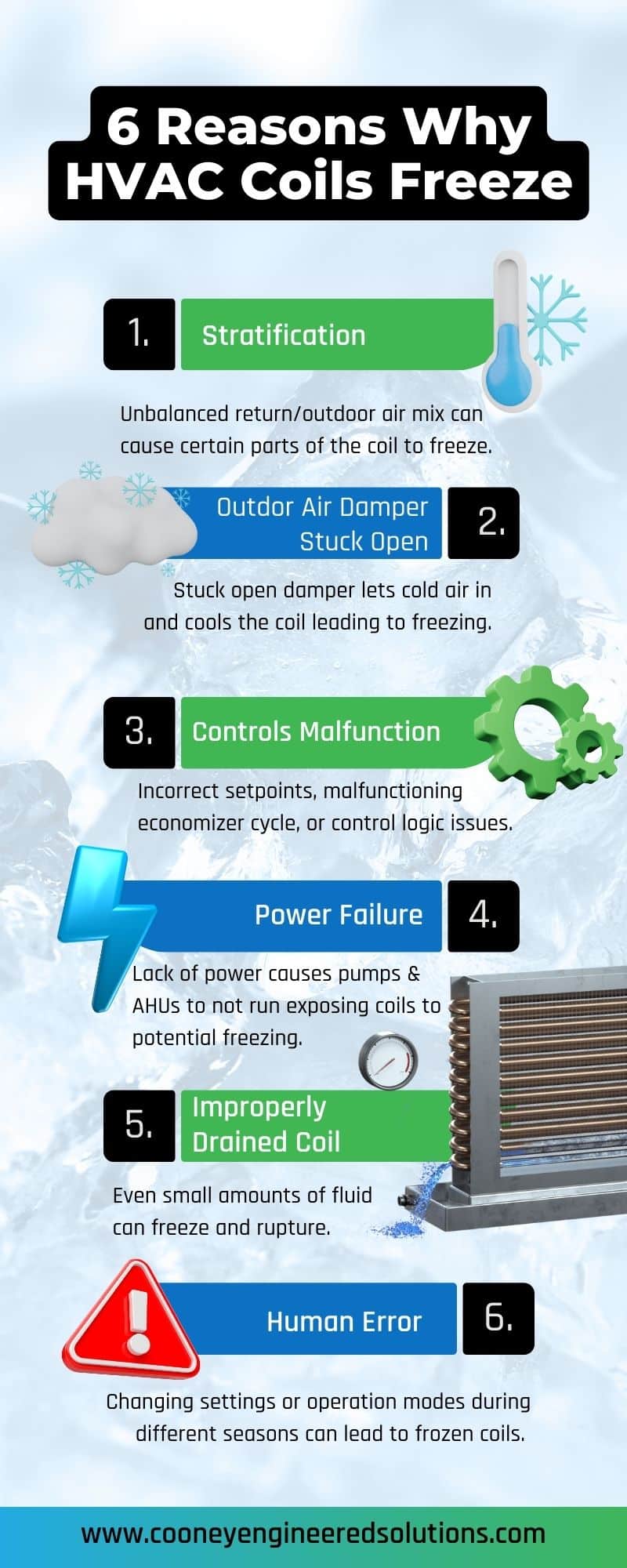
Coils freeze for more reasons than a cold night. The common causes:
- Stratification - When the mix of return and outdoor air is not balanced correctly, stratification can occur, cooling certain parts of the coil more than others and potentially causing them to freeze.
- Outdoor Air Damper Stuck Open - If the outdoor air damper is stuck open, it can allow cold outside air to enter and cool the coil, leading to freezing.
- Controls Malfunction - Faulty controls or settings can cause coils to freeze. This could be due to an incorrect setpoint temperature, a malfunctioning economizer cycle, or an issue with the system's control logic.
- Power Failure - If the power to a building or facility fails, the circulating pumps and AHUs will not run and coils will be exposed to cold air, leading to freezing.
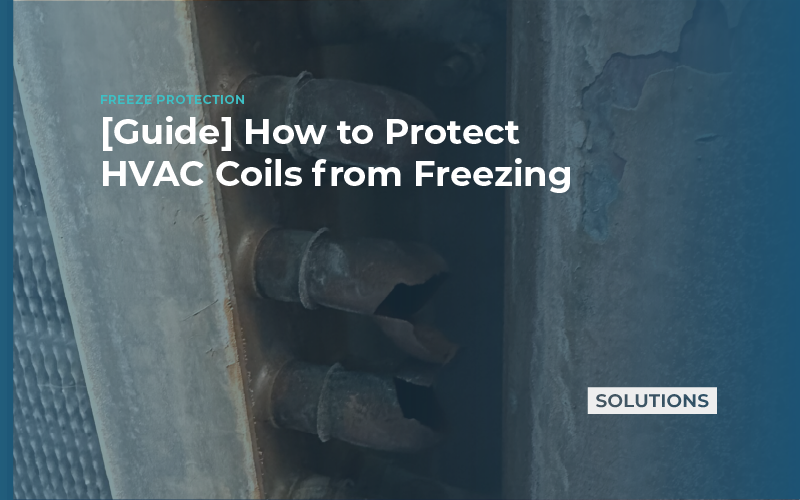
- Improperly Drained Coil - Even a small amount of fluid left in a coil has the potential to freeze and create enough pressure to rupture an HVAC coil's return bends.
- Human Error - changing settings or operation modes that were intended for one season but have unintended consequences during another season can lead to frozen coils.
With the right strategy and one or more freeze protection technologies, every one of these can be managed.
Coil Freeze Protection Technologies
Freeze Stats
Freeze stats are a low-temperature limit control device used to protect hot or chilled water coils in an air handler and can be effective in preventing freezing. However, nuisance alarms caused by the freeze stat are common and may result in maintenance departments lowering the trip temperature. It's important that the freeze stat trips before the coil freezes to avoid ruptured coils. To ensure proper operation of the freeze stat, calibrations and trip tests should be done annually before cold weather arrives. Following the sequence of operation when testing is also important to prevent costly repairs from frozen coils.
Draining Coils During the Winter
Draining fluid coils for the season removes the fluid that would otherwise freeze. It works, but timing it is hard when temperatures swing and warm weather runs late into fall. It also takes labor, and preventive maintenance is usually where short-staffed facilities teams fall behind first. Done right, it needs attention and enough hands to get through it before the cold sets in.
Recirculating Pump
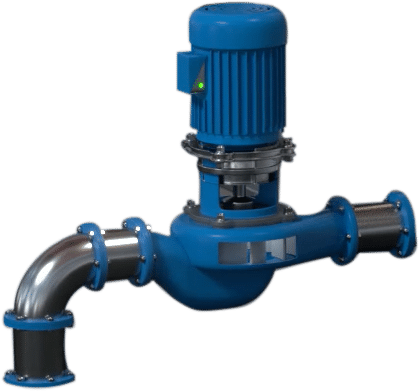
A recirculating pump keeps fluid moving so it stays above freezing even as outdoor temperatures drop. Like any pump system, it needs regular inspection and maintenance ahead of winter. The catch is power: if the pump loses power, the fluid stops moving, and a still coil in cold air is back to square one.
Freeze Block Technology
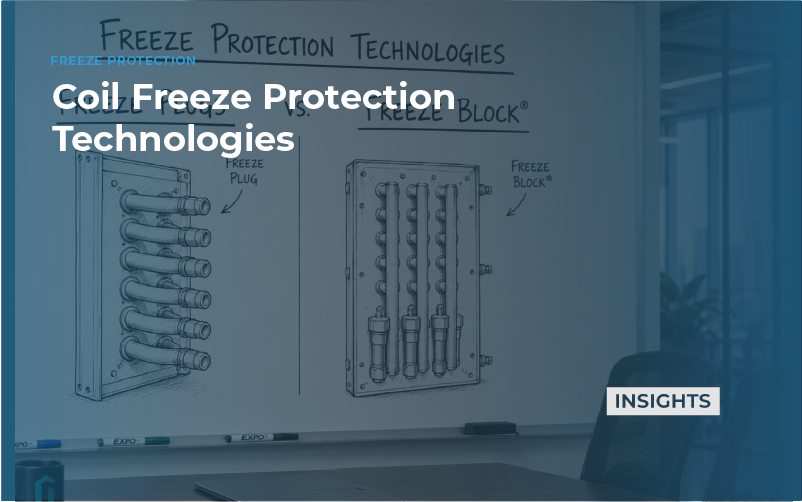
Freeze Block® works as an added layer of protection alongside your other strategies, on steam, hot water, and chilled water coils.
A Freeze Block coil pairs a pressure and temperature relief valve with an integrated expansion relief header. When freezing conditions hit, the valve senses it and releases a controlled amount of fluid, giving ice room to form without rupturing the coil. The valve reseats on its own, so the coil returns to normal operation once it thaws.
What sets it apart:
- Protects without power, so an outage doesn't take your protection down with it.
- Lets you run water instead of glycol, which helps you evaluate and reduce glycol use.
- No nuisance alarms and little to no maintenance.
- Patented technology, with thousands of installations across North America.
Glycol
Glycol is an antifreeze solution of ethylene or propylene glycol mixed with water, circulated through the system to lower the fluid's freezing point. It works, with conditions attached. The concentration has to be monitored and adjusted to keep the freeze point low enough, and as concentration rises, so does energy use and operating cost. Over time glycol can lose effectiveness through evaporative loss or contamination and need replacing. It's a viable option, but one that leans on careful, ongoing maintenance to keep performing.
Don’t Let Your HVAC Coils Freeze this Winter
Coils freeze from controls, power loss, and simple human error, and the fix is rarely one product. Glycol, freeze stats, seasonal draining, and Freeze Block coils each have a place, and the right mix depends on your building and how it runs.
Not sure which approach fits your facility? Set up a lunch and learn with our team. We'll walk through the options, talk through your systems, and help you land on a plan that holds up when the temperature drops.
Don't let your HVAC coils freeze this winter - take action now and protect them with Freeze Block Coils!
Freeze Block Coils are designed to prevent bursting of frozen coils by incorporating a pressure and temperature relief valve, combined with an expansion relief header. This specialized technology provides reliable protection against freezing without relying on power, and requires little to no maintenance. Plus, it's more environmentally friendly than other antifreeze solutions. Protect your HVAC system today and invest in Freeze Block Coils - the perfect solution for freeze protection!