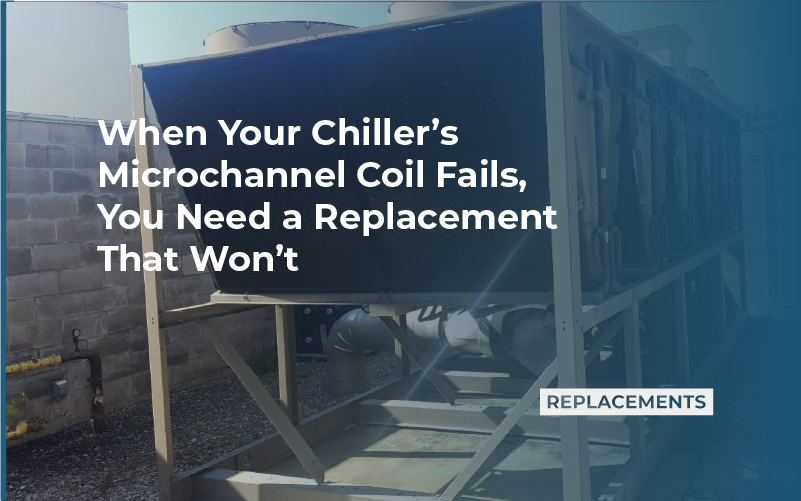
When an OEM microchannel coil leaks, most building owners get pushed toward the same replacement: another automotive-style coil with thin tube walls, built to a price point, destined to fail the same way in another few years.
There's a better option. Cooney Technologies is an EVAPCO Alcoil distributor for the Philadelphia region, and EVAPCO Alcoil builds microchannel coils to a different standard.
Why microchannel coils fail
Coils fail for predictable reasons:
- Vibration
- Corrosion
- Excessive fan cycling
- Low-load cycling
- Physical damage
Traditional fin/tube coils have their own failure mode: galvanic copper-to-aluminum corrosion that degrades fin performance over time, with copper elbows and tubes that pit, corrode, and crack. Mean time to failure usually lands somewhere between 5 and 20 years depending on environment and construction quality.
Microchannel coils were supposed to solve the corrosion problem, and in many ways they do. All-aluminum construction eliminates the galvanic issue entirely. But most OEM microchannel coils are built on automotive designs with thin tube walls. They go into chillers and rooftop units that face vibration, seacoast air, and decades of thermal cycling. That's not what they were designed for.
Replacing a failed OEM microchannel coil with the same OEM microchannel coil sets you up to do this again.
What EVAPCO Alcoil builds differently
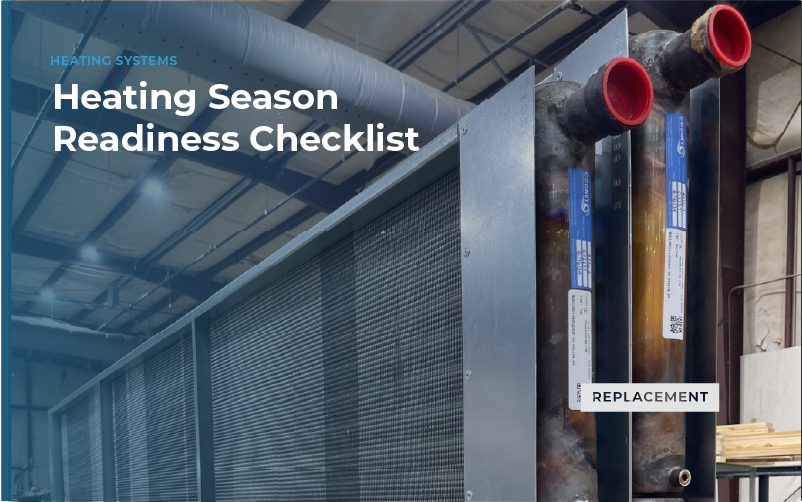
EVAPCO Alcoil microchannel coils are all-aluminum, with fins integrally brazed to tubes and tubes integrally brazed to headers, the construction that makes microchannel work. The difference is everything around that.
These are built for industrial conditions, not passenger vehicles. Thicker tubes. Thicker headers. Vertical tube orientation to shed standing water and reduce thermal stress. Designed for longer service life in the environments where chillers and condensers actually live.
EVAPCO Alcoil vs. OEM microchannel
| Feature | EVAPCO Alcoil | Typical OEM microchannel |
|---|---|---|
| Design intent | Industrial | Automotive-derived |
| Tube wall thickness | 25–30% thicker | Standard automotive gauge |
| Corrosion protection | Epoxy coating available | Varies by OEM |
| Refrigerant pressure drop | Lower (better oil return) | Higher |
| Charging | Built-in mini-receiver in lower header | Requires external receiver |
| Installation | Side flange, drop-in / slide-in | OEM-specific brackets |
| Warranty | 5 years | Typically 1 year |
Stock and custom coils available
Most replacements ship from stock for common chiller and condenser configurations. For non-standard sizes or rebuilds where the original geometry has to be matched exactly, EVAPCO Alcoil builds to spec.
Either way, the path is the same: send us the failed coil's specs, or have a Cooney technical sales rep measure on site. We confirm the replacement, and you get the right coil the first time.
Make sure your microchannel coils are ready for cooling season
If you're seeing dark spots on a condenser face, refrigerant leaks at the headers, or capacity loss that doesn't trace back to anything else, the coil is telling you something. The right time to plan a replacement is before the next 95°F week, not during it.