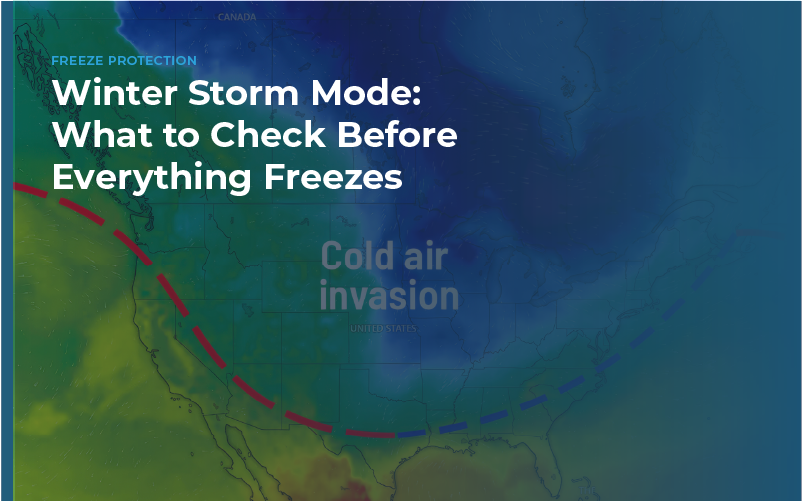
Storm Mode: What to Check Before Everything Freezes
A major winter storm is bearing down, set to blanket dozens of states in snow, ice, and dangerously cold temperatures. Some regions are built for this kind of weather. Others aren't.
Before things get messy, here's a practical, no-fluff checklist for prepping your coils and air handlers. Take a few minutes now to walk through it. Once the cold sets in, it's too late to second-guess.
A Practical Pre-Storm Checklist for Coils and Air Handlers
Freeze damage doesn't always show up when it happens. More often, you see the impact after the storm:
- Return-bend leaks at startup
- Header ruptures discovered days later
- Emergency coil replacements when lead times are tight
It's not just inconvenient. It's expensive. And disruptive. Understanding where coil failures start is key to stopping them before they do.
-
Is Freeze Protection On?
Check that freezestats and low-temp alarms are active. Look in the BAS or control panel to confirm. Watch for seasonal overrides or temporary changes that were never reset.
-
Are Outdoor Air Dampers Closing Fully?
Manually inspect to make sure dampers close tightly. Even a small opening can let in freezing air that risks coil damage.
-
Is Water Draining Properly?
Clear drain pans and P-traps. Remove any standing water. Frozen drains can lead to overflow and flooded air handlers once thawed.
-
Are Problem Coils Flagged?
Identify coils that froze last winter, leaked at spring startup, or have been repaired in the past. Plan to check these units first after the storm.
-
Is Airflow Good?
Check filters, fan operation, and any recent changes to BAS settings. Low airflow can create cold spots that lead to freezing.
-
Is Glycol Where It Should Be? (If Used)
Test glycol concentration. Don't rely on old labels. Systems that have been topped off may not have proper freeze protection.
-
Do You See Signs of Past Freeze Damage?
Look for bent fins near coil ends, rust or discoloration at headers, or old patch and braze work. These are warning signs to address now.
-
Do You Have a Restart Plan?
Know which AHUs will be checked first. Many freeze failures don't appear until after systems restart. Inspect before going fully online.
Need a Hand After the Storm?
If you ran into freeze issues, or just want to make sure you don't next time, we're here to help. Whether you need replacement coils fast or want to talk through freeze protection strategies like Freeze Block®, our team is ready.
We can assess what went wrong, troubleshoot problem areas, and help put long-term solutions in place. From one-time support to full system planning, we've got your back.
Get a Quote