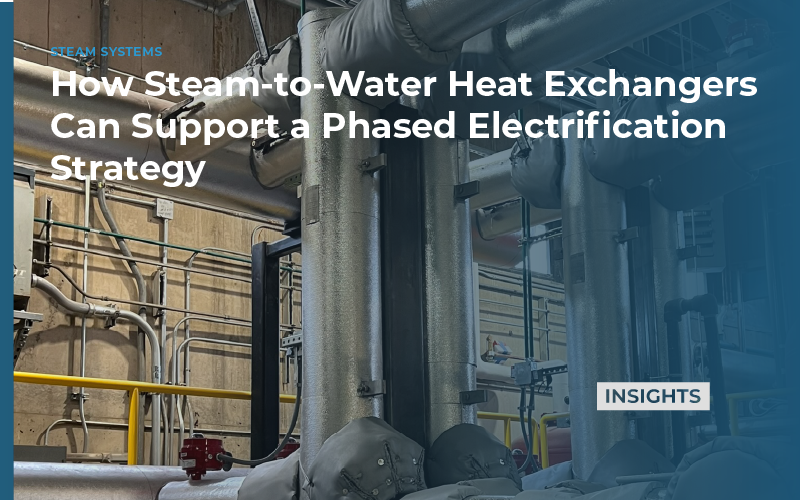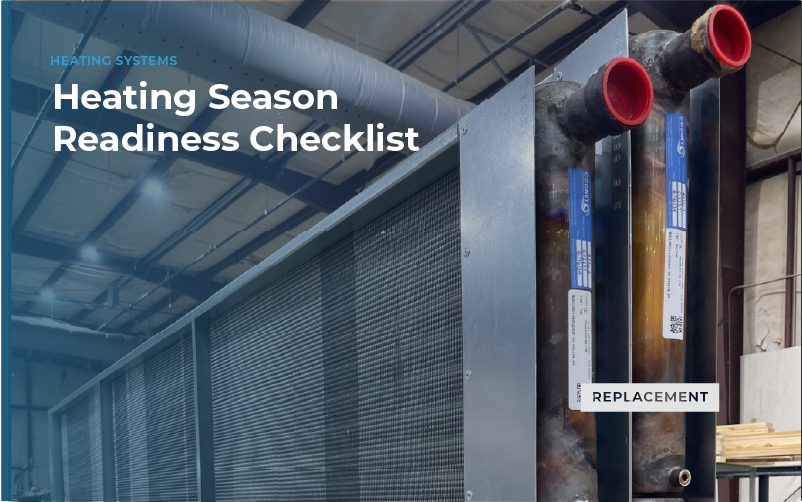
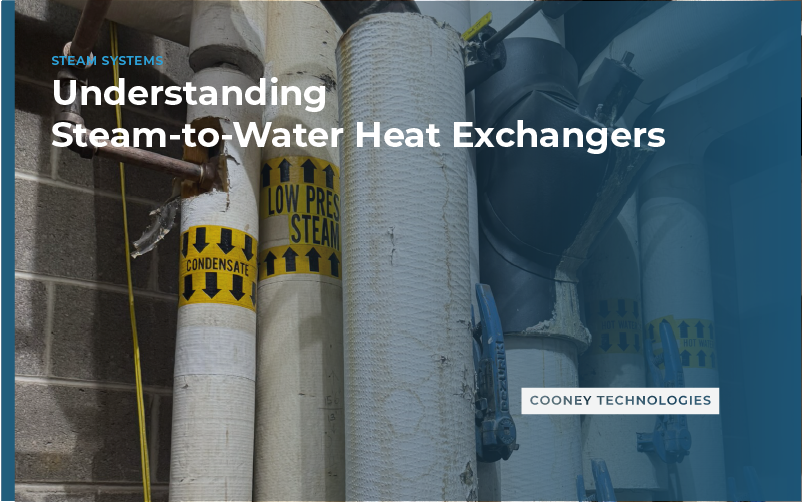
A steam to water heat exchanger transfers heat from a building’s steam supply into water. Facilities use them to generate heating hot water for the building and domestic hot water for sinks, showers, and process loads.
If your building runs on a central steam plant or district steam, hospitals, universities, and older commercial buildings usually do, a steam to water heat exchanger is doing this work somewhere in your mechanical room right now. Many of them have been doing it the same way for 40 years.
This guide covers the four common types, how they compare, and what to weigh before you replace one.
The Four Common Types of Steam to Water Heat Exchangers
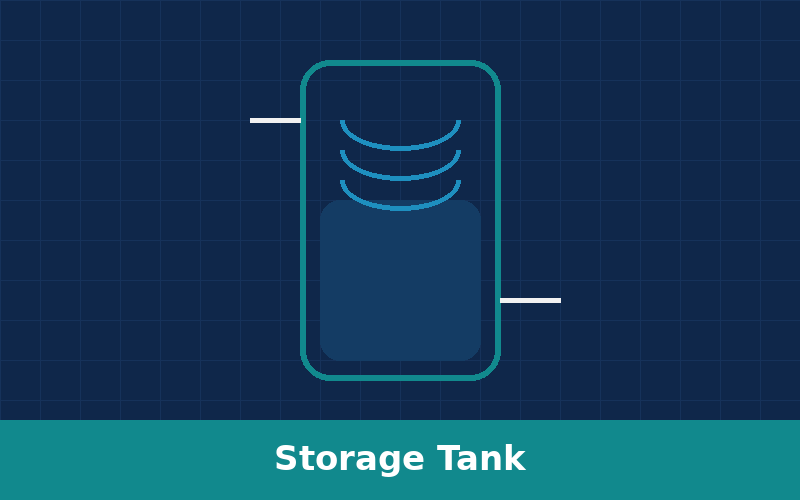
Hot Water Generator Storage Tanks
The traditional approach for domestic hot water. A steam bundle or heating hot water bundle sits inside a large storage tank and heats the stored volume.
They work, but they come with tradeoffs: a large footprint, standby heat loss from all that stored water, stagnant water conditions that can raise Legionella concerns, and messy repairs when a bundle leaks inside the tank.
Shell and Tube Heat Exchangers
The most common type in commercial and industrial buildings. A bundle of straight tubes sits inside an outer shell. Steam heats the tubes, water passes through them.
Shell and tube units handle large volumes and offer decent temperature control. The catch is maintenance. You need clear pull space to remove the bundle, tube sheets and rolled tube joints can loosen over time, and traditional designs send hot condensate out with usable energy still in it, which shows up as flash steam in the condensate system.
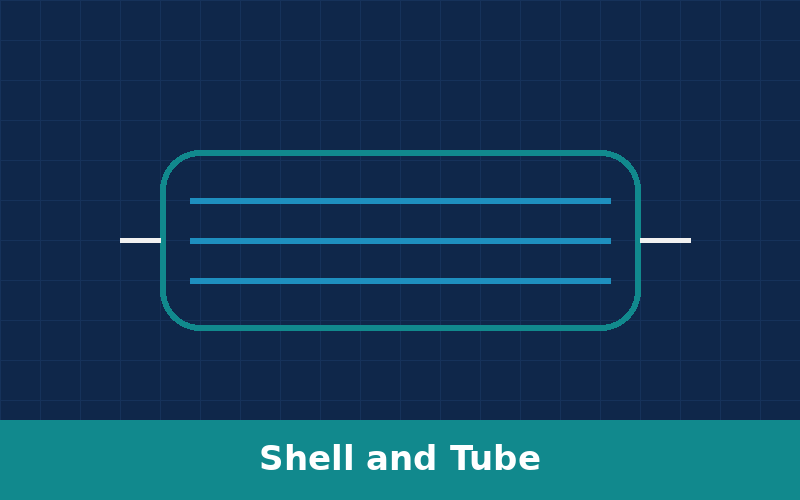
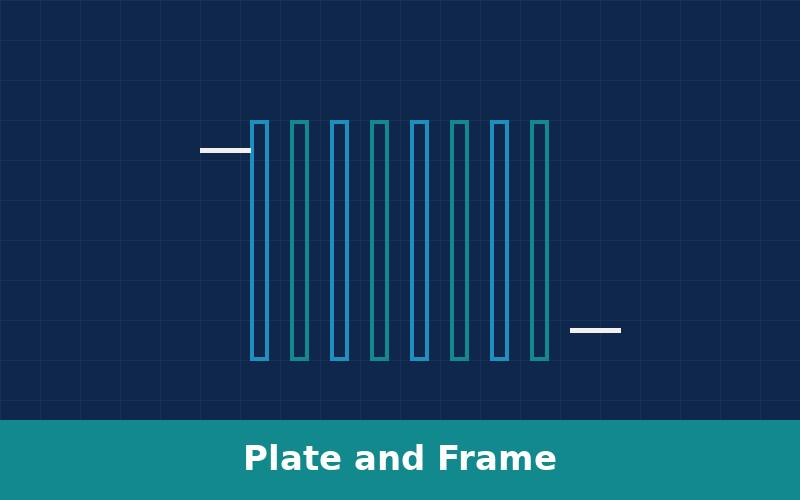
Plate and Frame Heat Exchangers
A stack of thin metal plates with gaskets between them, creating alternating channels for each fluid. Plate and frame units are compact and efficient in the right application.
Steam is not usually the right application. High steam temperatures wear out gaskets, and the narrow channels clog without well-filtered water. These units are generally better suited to water-to-water duty.
Shell and Coil Heat Exchangers
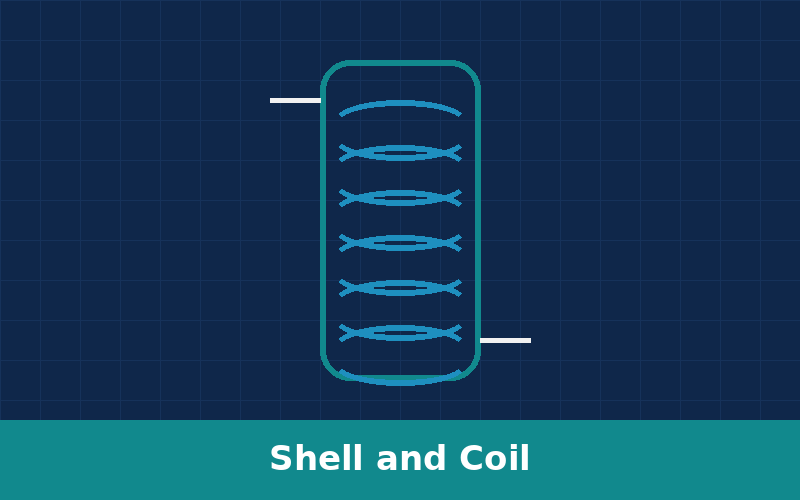
The newer design in this category. Instead of straight tubes, steam flows through helically wound, corrugated tubes inside a compact vertical shell. Water flows around them in a cross-counterflow pattern.
That geometry matters for two reasons. First, it packs a large heat transfer surface into a small vertical footprint, which suits tight mechanical rooms. Second, cross-counterflow design lets the unit sub-cool the condensate, capturing both the latent heat of the steam and the sensible heat of the condensate before it leaves. Traditional designs let that second portion of energy escape.
How the Four Types Compare
What to Consider Before Selecting a Steam to Water Heat Exchanger
Materials and Construction
Material determines lifespan. Carbon steel shells are robust but prone to corrosion and pitting over time. Fully welded 316L stainless steel resists corrosion, thermal shock, and fouling, and removes gaskets and rolled joints from the failure list entirely.
Maintenance Requirements
Ask what the unit will demand from your team in year ten. Tube bundles need pull space and periodic replacement. Rolled tube joints can loosen and leak. Gaskets wear. A design with no tube sheet and no bundle takes those line items off your maintenance plan.
Energy Efficiency
The biggest efficiency gap between designs is what happens to the condensate. Units that sub-cool condensate recover energy that traditional shell and tube systems send down the line as flash steam. In practice, shell and coil designs deliver 10 to 15% steam savings compared to a standard shell and tube heat exchanger.
Space and Footprint
Mechanical rooms rarely get bigger. A horizontal shell and tube unit needs its own footprint plus clear pull space for bundle removal. A vertical shell and coil unit needs neither, which is why it shows up so often in retrofit projects.
A Shell and Coil System Engineered as a Complete Package
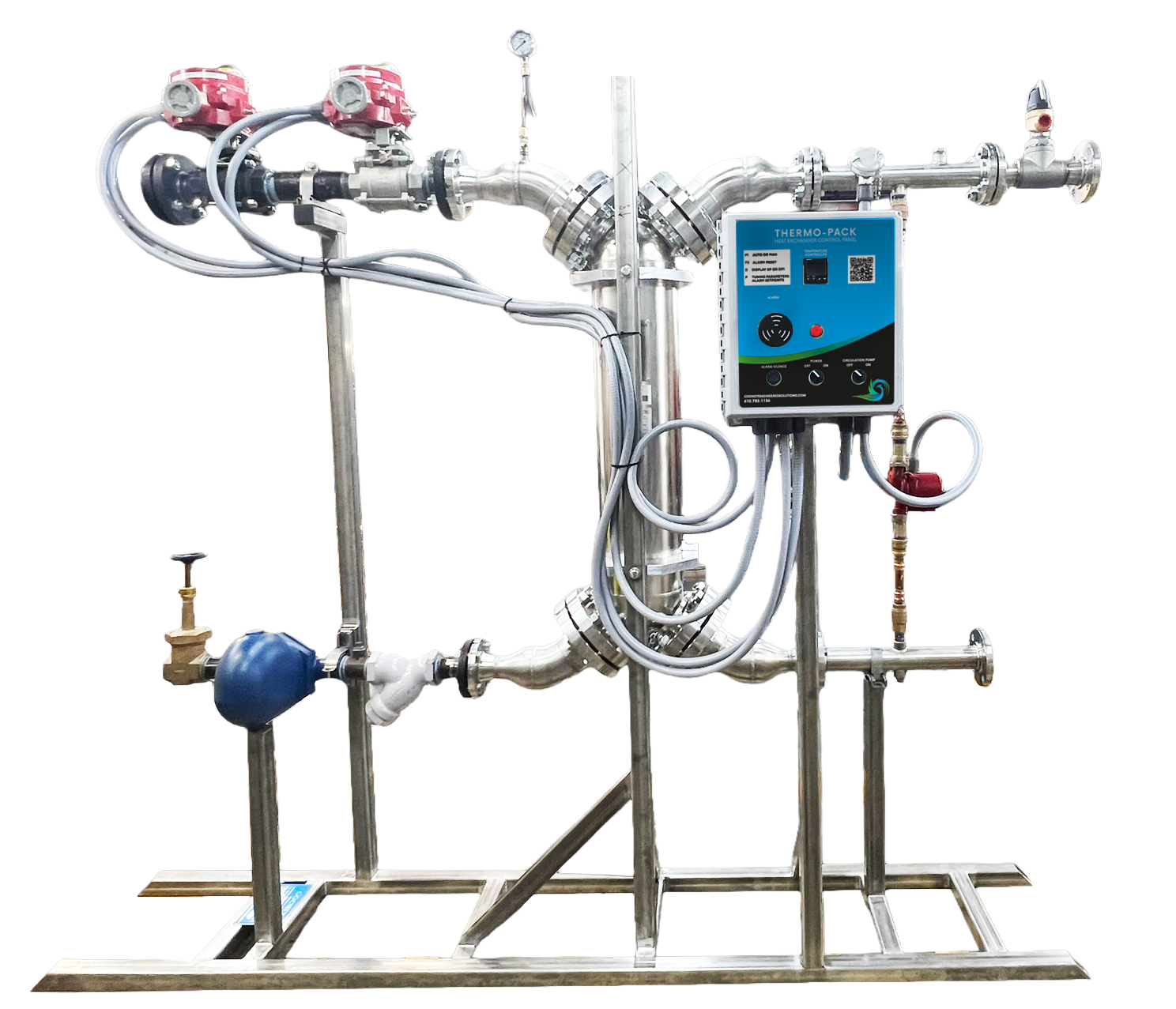
Thermo-Pack® is Cooney Technologies’ shell and coil steam to water heat exchanger, delivered as a pre-engineered, skid-mounted system for both heating hot water and domestic hot water applications.
The heat exchanger itself is fully welded, electropolished 316L stainless steel. No tube sheet. No rolled tubes. No bundle to pull. The cross-counterflow, condensate sub-cooling design delivers 10 to 15% steam savings compared to a standard shell and tube heat exchanger, and the vertical footprint fits mechanical rooms that were never designed with replacement in mind.
Every Thermo-Pack® system is engineered in-house by Cooney Technologies and fabricated in the USA.
Frequently Asked Questions
What is a steam to water heat exchanger?
A steam to water heat exchanger transfers heat from steam into water. Buildings with central steam plants use them to produce heating hot water for HVAC systems and domestic hot water for fixtures and equipment.
Which type of steam to water heat exchanger is most efficient?
Shell and coil designs are the most efficient for steam service. Their cross-counterflow geometry sub-cools the condensate, capturing latent and sensible heat that traditional shell and tube systems lose as flash steam, typically 10 to 15% steam savings.
What is the difference between shell and tube and shell and coil?
Shell and tube uses straight tubes in a horizontal shell and requires pull space for bundle maintenance. Shell and coil uses helically wound tubes in a compact vertical shell, has no tube bundle to replace, and recovers more energy from the condensate.
How long does a steam to water heat exchanger last?
It depends heavily on materials. Carbon steel units corrode and pit over time, and rolled tube joints can loosen and leak. Fully welded 316L stainless steel construction resists corrosion, thermal shock, and fouling for a longer service life.
Can a shell and coil unit replace my existing shell and tube heat exchanger?
In most cases, yes. The vertical footprint typically fits within the space of the existing unit without requiring bundle pull clearance. Cooney Technologies reviews the application and engineers each system to the facility’s steam conditions and load.
Talk Through Your Steam System
Replacing a steam to water heat exchanger is a decision you make once every few decades. Get it right. Cooney Technologies reviews every application before quoting, so the system you install matches the loads you actually have.
Call (610) 783-1136 or email quotes@cooneytech.com