It's 2 a.m. The first arctic blast of the season just rolled in, and the temperature dropped faster than the forecast said it would. Somewhere in an air handler, an outdoor air damper didn't close all the way, and one corner of a coil sat in air colder than anything the system was designed around.
By morning, it thaws. The system comes back up to pressure. And water goes where it was never supposed to go.
The coil is the cheapest part of what happens next.
Five costs that show up after the coil fails
The water damage
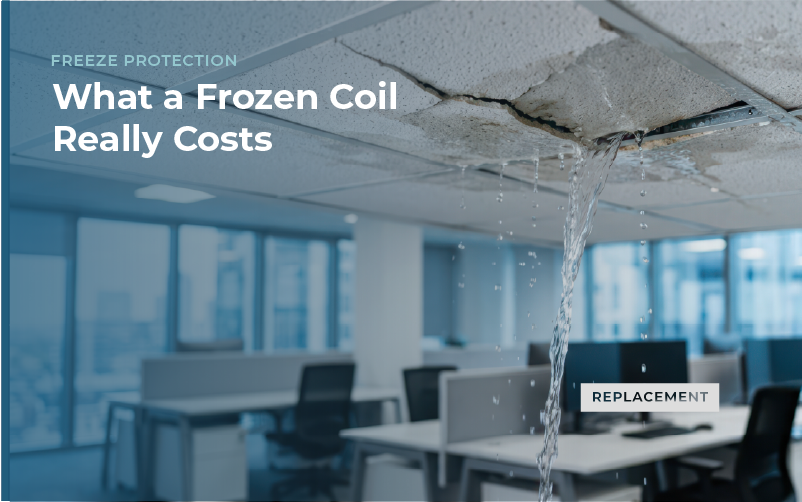
A ruptured coil doesn't fail quietly. Once it thaws and pressure returns, water can flood the unit, the mechanical room, or the ceiling of the space below. Then comes the cleanup: wet insulation, damaged equipment, and in some cases mold remediation. None of that shows up in the price of a replacement coil.
The downtime
In an office building, a down air handler is uncomfortable. In an operating suite, a research lab, or a pharmaceutical production space, it's a different conversation. Those spaces can't simply wait it out. A single coil failure can put months of research, a production schedule, or patient care on hold.
The wait
This is the cost most teams aren't planning for this year. Much of the coil industry's production capacity is being pulled toward large data center projects, and that work tends to move to the front of the line. If you need a replacement coil in the middle of winter, standard lead times may be longer than you're used to. Getting a coil in 2 or 4 weeks is often possible, but it may mean paying for an expedite to jump the line.
That's why the first thing we ask is when you need the coil. From there, we work with our manufacturing partners' production and planning teams to meet your timeline. And we'll always give you an up-front, honest read on the situation, even if it turns out we might not be able to help.
Limping through the season
While you wait, someone has to keep the building running. That usually means field brazing ruptured tubes, plugging circuits, or rigging temporary heat. It takes skilled labor, which is hard to find on short notice. And temporary fixes have a way of becoming the plan for the rest of the winter.
The calls nobody wants to make
To leadership. To occupants. Sometimes to your insurance company. A frozen coil turns into a long list of conversations that pull your team away from everything else they were supposed to get done.
Why it still happens in well-designed systems
Most coils that freeze weren't poorly designed. Something outside the design went wrong:
- An outdoor air damper rusted or stuck open
- Stratification left part of the coil exposed to near-freezing air
- A power failure stopped pumps and air handlers
- A freeze stat was turned down after one too many nuisance trips
- A drained coil still held a little water in the return bends
- Steam pressure dropped and a preheat coil couldn't keep up
You can do everything right and still have a cold night find the one weak spot.
From preventing freezes to preventing ruptures
You can't promise a coil will never see freezing conditions. What you can control is whether a freeze turns into a rupture.
How Freeze Block® works
Freeze Block® is a pressure and temperature relief valve paired with an expansion relief header. When freezing conditions build pressure inside the coil, Freeze Block® releases a small, controlled amount of fluid before the tubes rupture, then reseats once things thaw. It works without power, needs little to no maintenance, and protects steam, hot water, and chilled water coils.
It isn't meant to replace your other strategies. Freeze stats, draining, and glycol all have a place. Freeze Block® is the layer that's still working when one of those doesn't.
Before the cold hits: a quick checklist
- Find your highest-risk coils. Look at units with high outdoor air percentages and coils serving critical spaces.
- Check freeze stat setpoints. Make sure nobody adjusted them to quiet nuisance alarms.
- Walk your dampers. Confirm outdoor air dampers close fully and actuators respond.
- Plan replacements now, not in January. If a coil is already showing its age, getting ahead of lead times matters more this year than most.
- Ask about Freeze Block® at replacement. If you're replacing a coil anyway, it's the easiest time to add rupture protection.
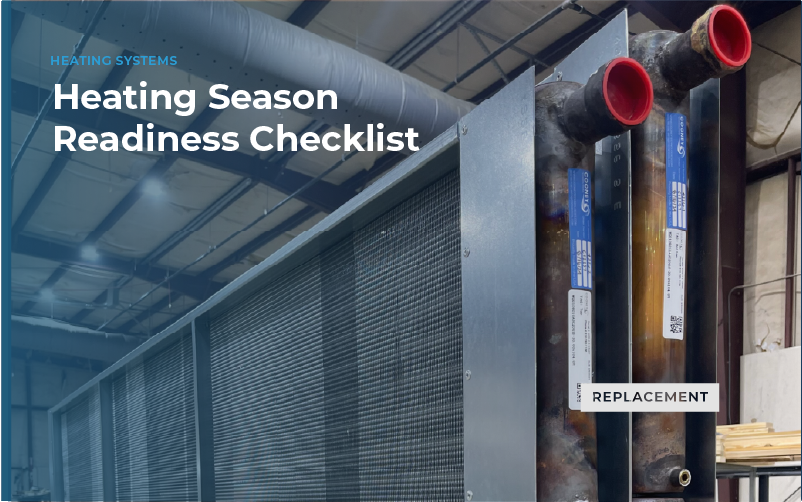
For a full walkthrough, see our Heating Season Readiness Checklist.
Get ahead of winter
Let's look at your coils before winter does
However you want to start, there's a way to get help.
Near our HQ
Close to King of Prussia, PA?
Our local team can come on site, take a look at your coils, and measure for a replacement.
Schedule a Site VisitAcross the country
Work with a local rep
Our network of trusted manufacturers' reps can help you assess your coils and plan what's next.
Find Your RepDo it yourself
Measure it yourself
Use our coil templates and how-to guides to measure and size the coil yourself.
Measure Your Coil