
ASHRAE is the leading authority on HVAC design in cold climates, and its guidance covers everything from insulation to equipment selection to minimizing air infiltration. This article walks through ASHRAE’s core recommendations for cold climate design, then digs into the piece that causes the most damage when it fails: coil freeze protection.
What a Frozen Coil Actually Costs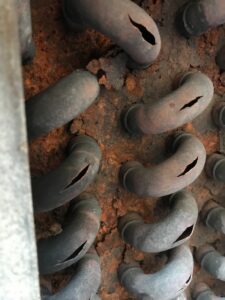
When a coil freezes, the ice expands and can crack or rupture the tubes. That’s the visible damage. It’s rarely the expensive part.
- Repair and replacement: A ruptured coil often means full replacement, not a patch.
- Secondary damage: A thawing coil floods the space around it, damaging walls, ceilings, and equipment nearby. Downtime from the repair adds lost operating time on top of the repair bill.
- Insurance impact: A water damage claim can push premiums up for years after the event.
Steam Coils
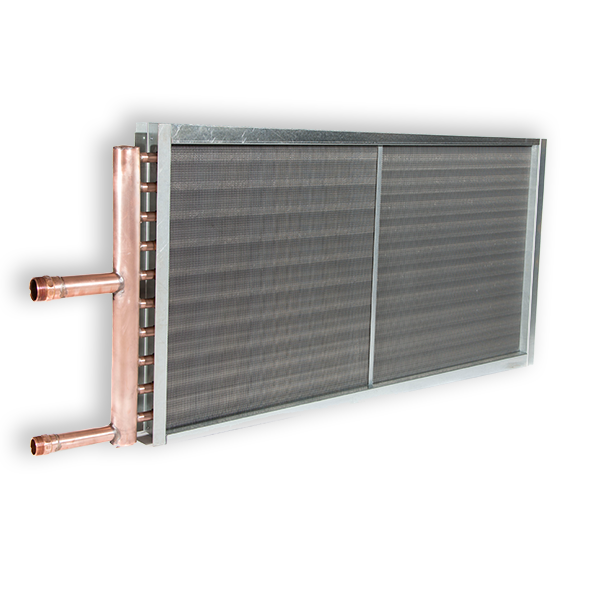
Steam coils heat air using steam from a boiler, but in cold climates they carry a real freeze risk of their own: frozen condensate can damage the coil, traps, and piping.
Where possible, a steam-to-glycol heat exchanger is the safer design, keeping steam out of the airstream entirely.
Where a steam coil has to sit directly in the airstream, look for nonfreeze construction, tube-within-a-tube, vertical feed, or integrated face-and-bypass dampers, and maintain constant steam flow through the coil to prevent condensate from pooling and freezing.
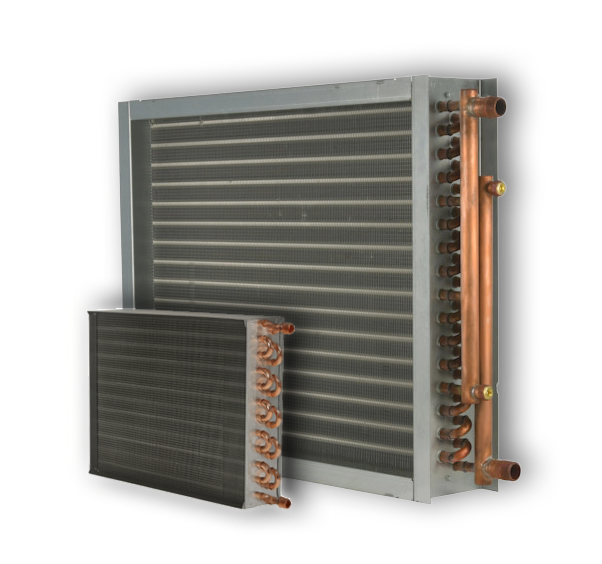
Hot Water Coils
Hot water coils work the same way, using hot water from a boiler instead of steam. In cold climate applications, they’re frequently run with a glycol mixture to lower the freezing point of the fluid. Glycol has real tradeoffs worth evaluating: added pumping energy, larger system infrastructure to offset reduced heat transfer performance, and ongoing maintenance and refill costs.
See the full breakdown of glycol’s tradeoffs
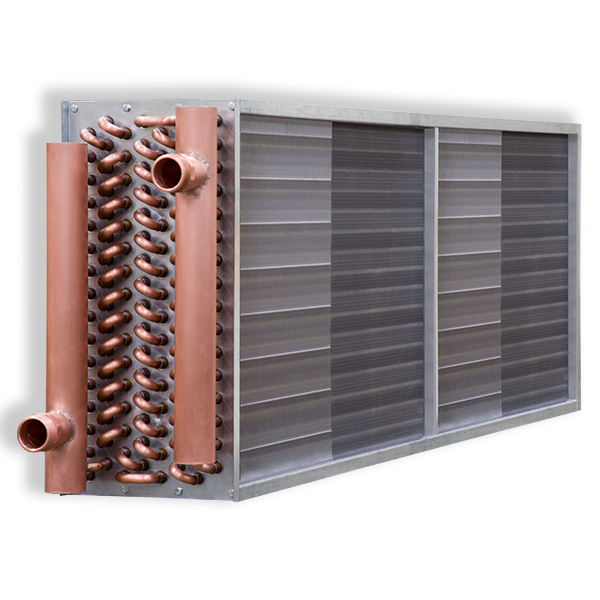
Chilled Water Coils
Cooling still matters in cold climate design.
Chilled water coils cool air using cold water circulated through the coil, and they carry their own freeze exposure any time outdoor air can reach them during shoulder-season operation or system shutdown.
Freeze Protection Strategies
Antifreeze Solutions
Glycol mixtures lower the freeze point of hydronic fluid exposed to outdoor air. Mixture strength should match the climate zone.
Mixed-Hydronic Systems
Circulate straight hot water for interior radiation terminal equipment, and generate heating glycol separately through a heat exchanger for outdoor-exposed AHU coils.
Recirculating Pumps
In milder climates, or where mixed air temperatures reduce freeze risk, a pump maintaining constant flow through the coil can help prevent freezing.
Isolation, Drains, and Vents
Chilled water coils used for cooling need isolation valves, drains, and vents so they can be flushed and drained ahead of cold weather.
Control Safeties
Freezestats placed downstream of the coil detect freezing conditions and shut the unit down to protect it.
Air Stratification
Cold outdoor air and warm return air don’t mix on their own; they stratify. That stratification can freeze the bottom of a water coil and trigger nuisance freezestat alarms on glycol coils.
Encourage Mixing
Damper positioning and air blenders reduce stratification before it reaches the coil.
Sensor Placement
Temperature sensors belong downstream of a blender for accurate readings, which means planning for the upstream and downstream clearance early in the air-handler layout.
Every Freeze Protection Method Has a Limit
ASHRAE’s recommendations are a solid foundation, and they come with real tradeoffs worth weighing before you spec a system.
Glycol lowers the freeze point, but it reduces heat transfer efficiency, adds pumping energy, and requires larger infrastructure to compensate. It also isn’t effective across every temperature range, and it comes with ongoing maintenance and refill costs. Read the truth about glycol in your HVAC system
Freezestats can trip on nuisance alarms and add downtime. Recirculating pumps may not run often enough to matter, and neither approach protects the coil during a power failure, which is exactly when systems are most exposed.
Freeze Block® Coils
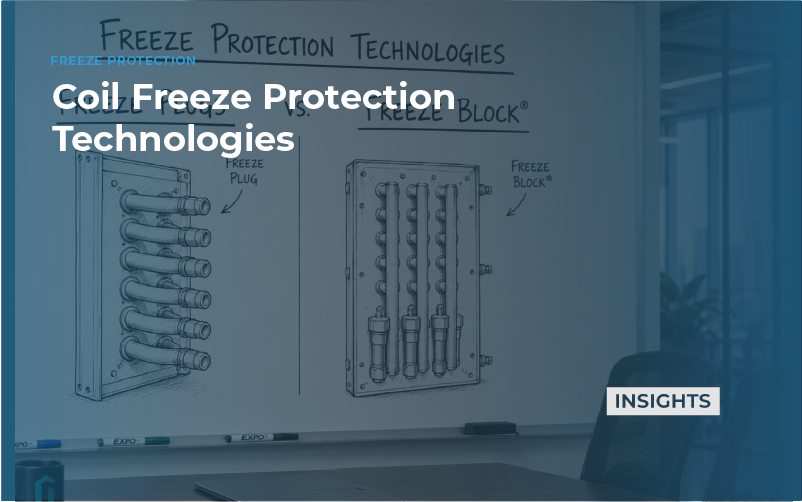
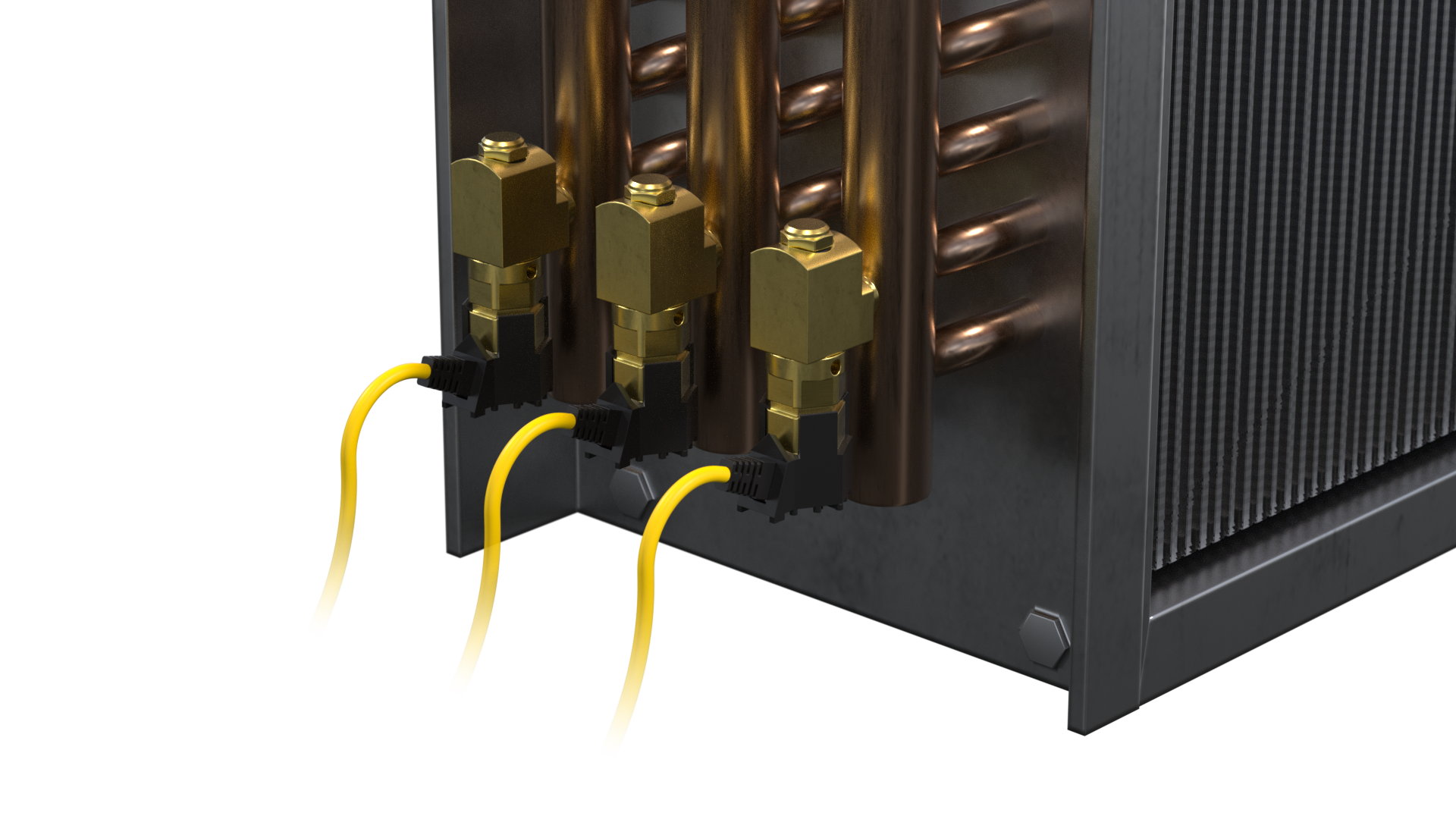
Freeze Block® coils are engineered with an expansion relief header and relief valve. When freezing conditions develop, the valve releases a controlled volume of fluid, designed to prevent coil rupture instead of controls, pumps, power, or a human response. The coil operates the same as a standard coil, with minimal impact on dimensions, and it’s backed by a 30-month freeze protection warranty.
Smart Coil is an add-on monitoring layer for Freeze Block® installations. It ties into a building automation system to deliver real-time freeze alerts to maintenance staff, extending the warranty to 48 months.
Freeze Block® has been tested to -74°F and is in use across thousands of installations in North America. In some applications, it can reduce reliance on glycol, cutting the tradeoffs discussed above.
Glycol doesn’t remove freeze risk entirely, either. A glycol-compatible Freeze Block® model is available for hydronic systems that already run glycol, adding a layer of protection against the failures glycol alone can’t cover: unexpected loss of flow, a stuck damper, a power outage, or gradual degradation of the glycol’s antifreeze properties over time that goes unnoticed until it’s tested by a hard freeze.
Key Points
- Expansion relief header and relief valve prevent rupture without power, pumps, or controls
- Tested to -74°F
- 30-month freeze protection warranty standard; 48-month with Smart Coil
- Can reduce glycol reliance in some applications; a glycol-compatible model is also available for systems that keep glycol and want backup protection
- Made in the USA
Design for the Conditions, Not Just the Spec Sheet
A cold climate system that performs well on paper still has to survive a power outage, a stuck damper, or a failed freezestat. Alongside ASHRAE’s guidance, factor in long-term maintenance cost, energy consumption, and what happens when a control fails, not just what happens when everything works as designed.